
In the realm of ultra-hard material processing, achieving superior cutting precision and tool durability is imperative. Brazing technology plays a pivotal role in elevating the performance of diamond cutting blades, surpassing conventional bonding methods such as electroplating and sintering. This article elucidates the principles behind brazing, its technical advantages, and practical applications that make it the preferred process for manufacturing advanced diamond tools.
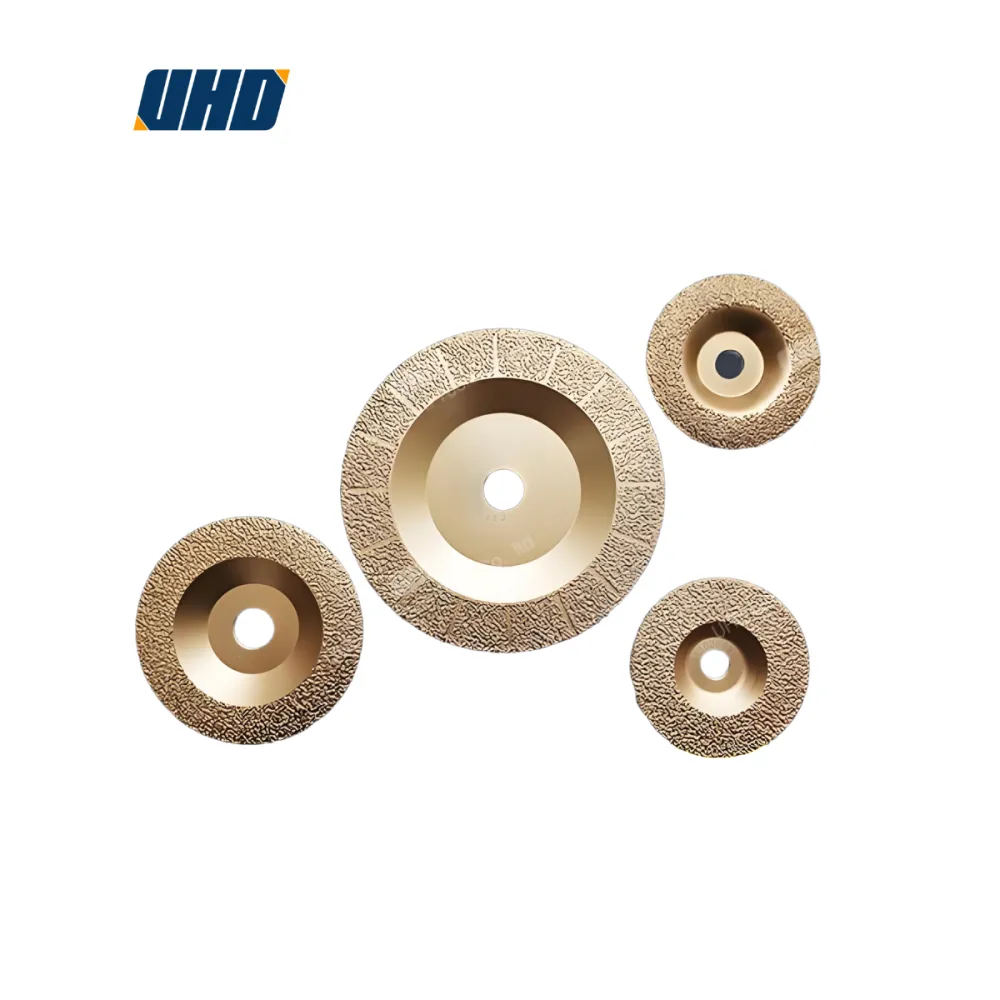
Brazing is a metal-joining technique where a filler metal is melted and drawn into the joint by capillary action, bonding diamond particles securely onto the tool substrate without melting the base materials. In diamond tool manufacturing, this process enhances particle retention and thermal conductivity—key factors that influence precision cutting and tool longevity.
| Feature | Electroplating | Sintering | Brazing |
|---|---|---|---|
| Bond Strength | Moderate (Up to 60 MPa) | High (Up to 100 MPa) | Superior (Up to 130 MPa) |
| Thermal Stability | Poor (Degrades above 200°C) | Moderate (Stable up to 400°C) | Excellent (Stable over 600°C) |
| Precision of Diamond Placement | Limited | Good | Exceptional (Micron-Level) |
| Service Life | Low (Average 20 hrs) | Moderate (Up to 50 hrs) | High (Beyond 70 hrs) |
Brazing significantly improves the bonding strength between diamond grains and the base material, typically a high-manganese steel substrate known for its toughness and resilience. This enhanced bond reduces premature diamond shedding, increasing operational reliability. Moreover, the improved thermal stability allows tools to operate efficiently under continuous high-temperature conditions, typical in processing grey cast iron, stainless steel, and stone materials.
Practical field tests have demonstrated that brazed diamond cutting wheels deliver up to a 40% increase in cutting speed and a 30% longer tool life when working on hard, abrasive surfaces such as granite and hardened steel plates. Their precision cutting capabilities translate into cleaner edges and reduced post-processing costs, meeting the stringent requirements of industries like automotive manufacturing, construction, and aerospace component fabrication.
“The adoption of brazed diamond tools has revolutionized our production line efficiency. The enhanced bond strength and thermal resistance have eliminated frequent tool changes, resulting in substantial cost savings.” — Customer feedback from a leading aerospace manufacturer.
The integration of an ultra-thin base layer in conjunction with a high-manganese steel substrate ensures not only tool safety but also impressive flexibility during operation. This design reduces overall tool weight, enhances maneuverability, and significantly diminishes vibrations — factors critical to achieving consistent cutting quality and operator comfort.

.png?x-oss-process=image/resize,h_1000,m_lfit/format,webp)
.png?x-oss-process=image/resize,h_1000,m_lfit/format,webp)

 <#else>





