
In the field of composite material processing, diamond abrasives have emerged as indispensable tools. The industry is witnessing a growing trend of using diamond abrasives due to their remarkable core value. These abrasives are designed to meet the increasing demand for high - precision and efficient cutting in various composite material processing scenarios.
Diamond abrasives demonstrate outstanding cutting stability and sharpness across a wide range of materials. For instance, when cutting grey iron, they can maintain a consistent cutting speed, with a cutting efficiency improvement of up to 30% compared to traditional abrasives. In stainless - steel processing, their sharpness ensures a smooth cutting surface, reducing the surface roughness by approximately 20%. When it comes to stone, glass, and ceramics, diamond abrasives show excellent resistance to wear, extending the tool life by 50% on average.
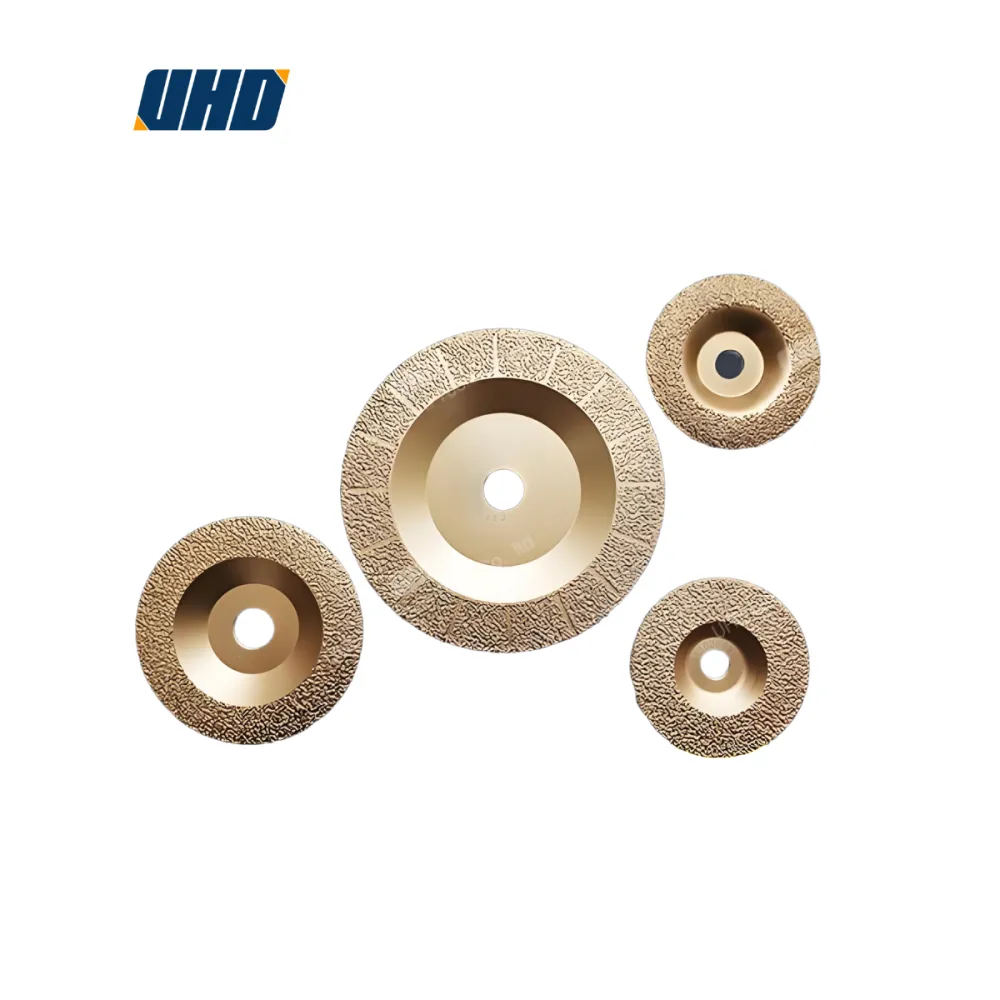
The product structure design of diamond abrasives, featuring a high - manganese steel substrate and an ultra - thin design, significantly enhances safety and flexibility. The high - manganese steel substrate provides strong support, reducing the risk of breakage during high - speed cutting. It can withstand a pressure of up to 500 MPa without deformation. The ultra - thin design allows for more precise cutting, enabling operators to perform intricate operations with ease. This combination of features makes diamond abrasives safer to use and more adaptable to different cutting requirements.
Numerous real - world application cases and data support the high efficiency and durability of diamond abrasives. In a large - scale composite material processing factory, after using diamond abrasives, the production output increased by 40% within a month. The abrasives also showed a high durability rate, with only 10% of the tools needing replacement after 100 hours of continuous use. These statistics clearly indicate the reliability and performance of diamond abrasives in actual production environments.
To maximize the tool life and cutting quality, it is essential to adjust the parameters according to the material characteristics. For soft composite materials, reducing the cutting pressure by 15% and increasing the rotation speed by 20% can improve the cutting quality. For hard materials, increasing the cutting pressure by 20% while maintaining a moderate rotation speed can prevent tool wear and ensure a smooth cutting process. By following these optimization suggestions, users can achieve better results in their composite material processing operations.
In conclusion, diamond abrasives offer unparalleled performance in composite material cutting. Their ability to provide precise cutting, high - efficiency, and stable operation, along with the quality assurance they offer, make them the ideal choice for B2B customers in the composite material processing industry. If you are looking for high - quality diamond abrasives for your composite material cutting needs, click here to explore our product range.

.png?x-oss-process=image/resize,h_1000,m_lfit/format,webp)
.png?x-oss-process=image/resize,h_1000,m_lfit/format,webp)
 <#else>





