
When a leading European mechanical engineering firm faced persistent challenges in stainless steel machining—low cutting efficiency, poor surface finish, and frequent tool wear—it turned to an unexpected solution: ultra-thin diamond grinding segments from Henan Youde Superhard Tools Co., Ltd.
For months, the company relied on conventional abrasive wheels. Results? A 40% increase in cycle time, inconsistent surface roughness (Ra > 3.0 μm), and safety concerns due to rapid tool degradation. Engineers noted that “the tools didn’t just wear—they fractured unpredictably.”
“We were spending more time changing tools than actually machining. That’s not productivity—it’s waste.” —— Marco L., Senior Process Engineer, German Industrial Machinery OEM
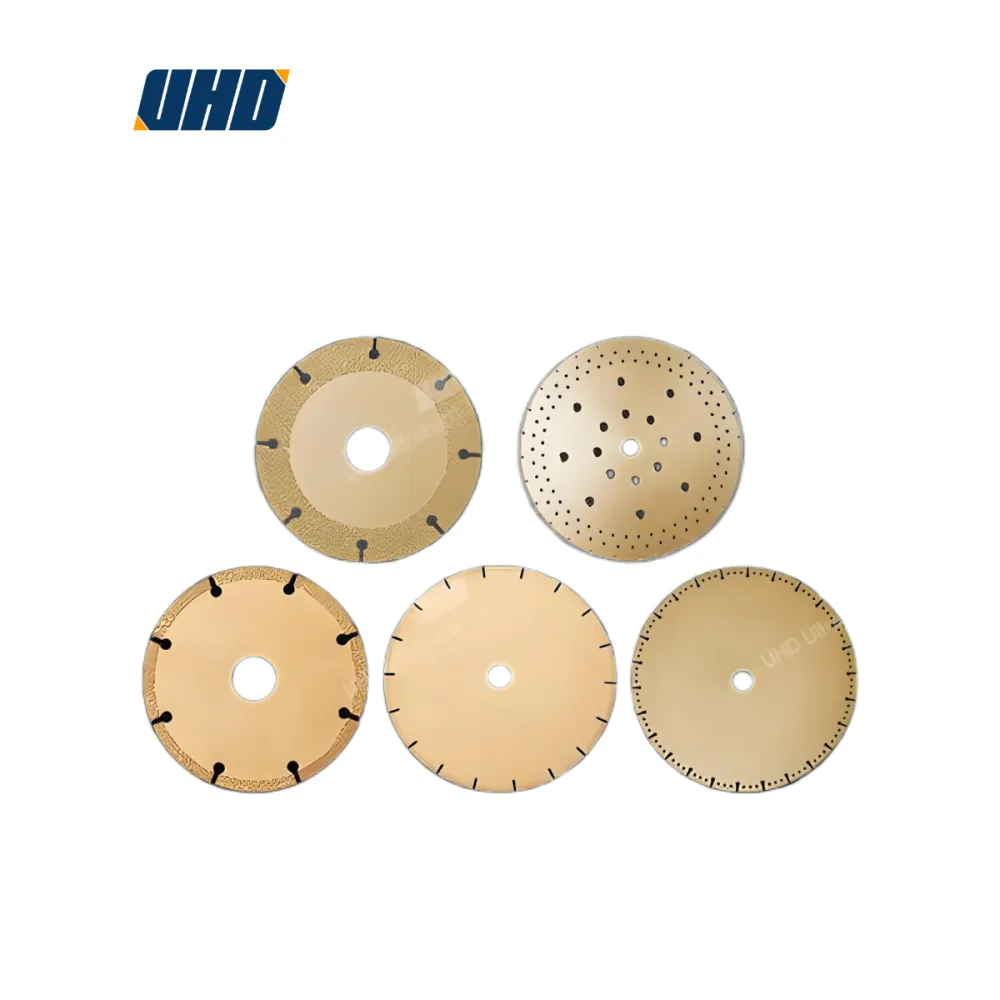
By switching to Henan Youde’s diamond grinding segments—featuring a high-manganese steel base, precision brazing technology, and uniform diamond particle distribution—the client saw immediate improvements:
These weren’t just lab numbers—they were verified across 12 production shifts, including high-volume batch runs of AISI 304 and 316L stainless steel parts.
The key lies in how these tools manage heat, stress, and wear:
This combination makes the solution ideal not only for stainless steel but also for titanium alloys, hardened steels, and other superalloys where traditional abrasives fail.
“This isn’t just about replacing a tool—it’s about upgrading your entire process.”
For manufacturers looking to move beyond “functional” to “precision,” this case proves that smart material selection can unlock measurable gains in throughput, quality, and sustainability.
.png?x-oss-process=image/resize,h_1000,m_lfit/format,webp)


 <#else>





